A recent piece on Medium compared e-mail to cockroaches in an effort to explain its longevity:
Email is a way to bypass the crowded room for something more intimate. When everything else is parading naked through the living room of your mind, email is politely waiting outside for a personal invitation. This is both good and bad when you’re trying to connect with the person on the other side of the door. They open it, or they don’t.
I'm not going to muse about how accurate this comparison might be, but I am going to use it as justification for one of my most prominent pet peeves: email without humanity. If email is truly best when it's a personal message, the worst offense a sender can commit is to fail to identify themselves. Here's an example: I recently got an email from my local recycling organization containing only the following text.
Good Afternoon
Which apt do you live in @ [my street address, spelled incorrectly]
I had requested some additional recycling bins, so this wasn't totally unexpected. The greeting is nice, but still, where's all the context? I can only suspect this message was written by a real, living human because the email address had the usual first initial plus last name format.

Even worse, some senders work under the pretense of a single organizational identity. This means they sign their emails with phrases like "Office Assistant" rather than any useful identifier. In short, they dehumanize themselves.

Email may offer convenient intimacy (at least, far more than whatever modern social networking provides) but this implied intimacy highlights situations where it's completely disregarded. Yes, I'm complaining about a decades-old form of communication. Yes, I'm venting. Even so, there's a lesson to be learned here: any medium of communication can lose its unique benefits without the right context.

Amsterdam - Day two, part two

There's that museum again.
The Rijksmuseum contains all manner of Dutch treasures, collections of artifacts which just happened to show up in the Netherlands, and an interpretive series titled Art Is Therapy. The last of these took the form of Post-it-styled notes stuck near some of the exhibits. Rather than just offering more information about the piece, each note asked probing questions about the feelings the piece may evoke or the relationship between art and a balanced life. This is a seethingly negative review from The Guardian. Invert that opinion and you have mine.*

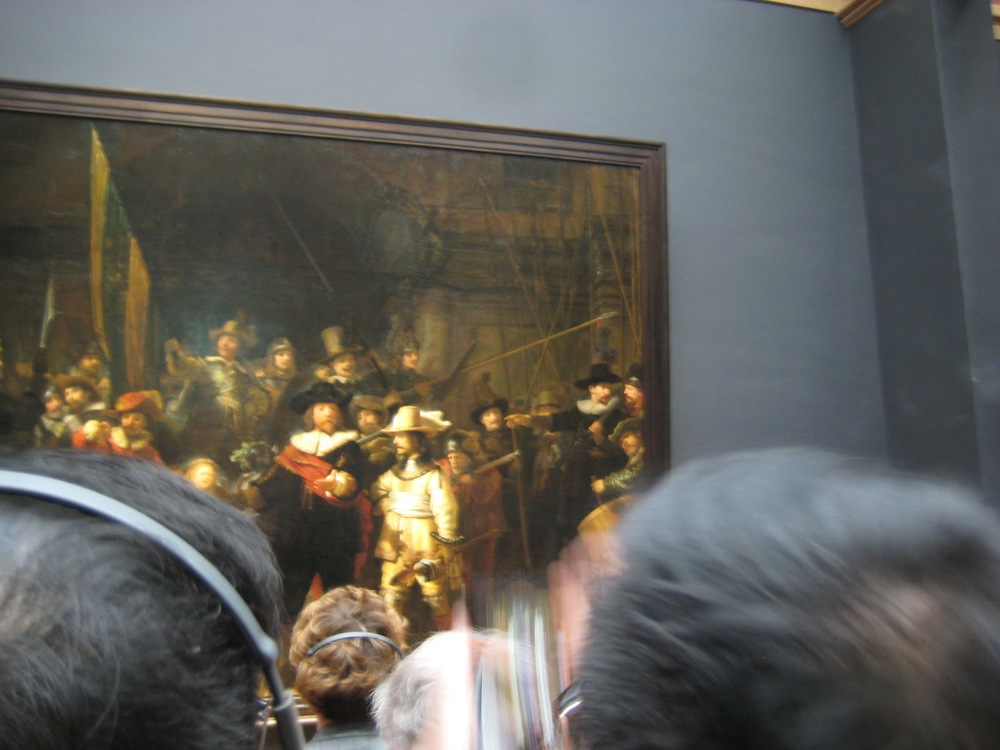
This is where they keep the Rembrants, the Vermeers, and the like. That's the Night Watch at the end of the hall.
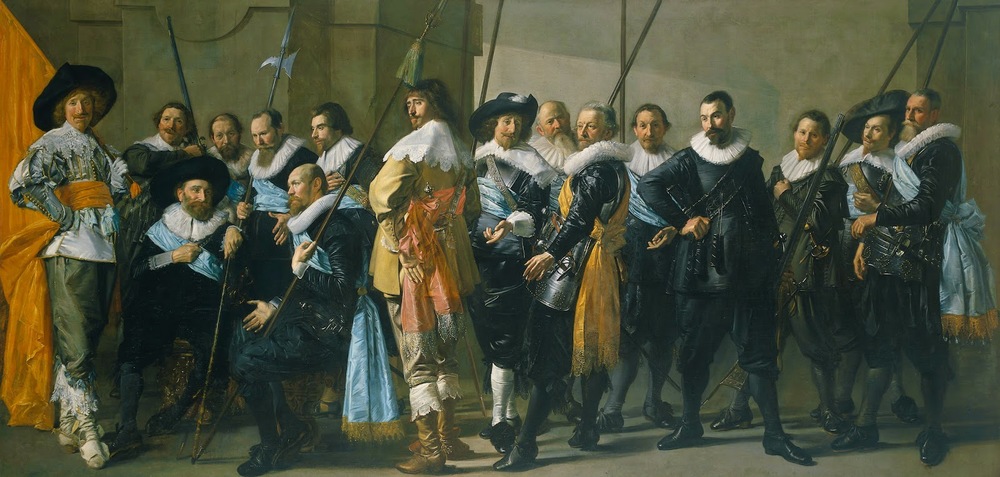
Pieces by the Golden Age Dutch painters often make me think of the group scenes used to promote TV shows with ensemble casts. Compare:
The cast of Law and Order: SVU.
The Meagre Company by Frans Hals and Pieter Codde, finished 1636.
Neither of those assemblages is Rembrandt's Night Watch, seen below.
It's difficult to get close.
Most museum patrons were busily attempting to photograph the whole thing. It's a challenge.
It's easy to understand the painting's popularity. It's rich in personality and fancy dress. It evokes an age and an aesthetic while leaving most contextual details (namely, whether this citizens' militia ever really had to post like that during their nightly patrols**) to the imagination.

The remainder of the Rijksmuseum contains items like 17th century dollhouses and exotic firearms.

Above the atrium of the Rijksmuseum.
The entranceway of the Rijksmuseum.
We followed the museum visit with a traditional Dutch dinner at The Pantry. It was quite respectable for its location in the middle of a tourist district (that is, just a block or so from both a McDonald's and a Hard Rock Cafe). In this context, "traditional Dutch" means meatballs and mashed potatoes, also known as stamppot. It goes nicely with a tasty Tripel.

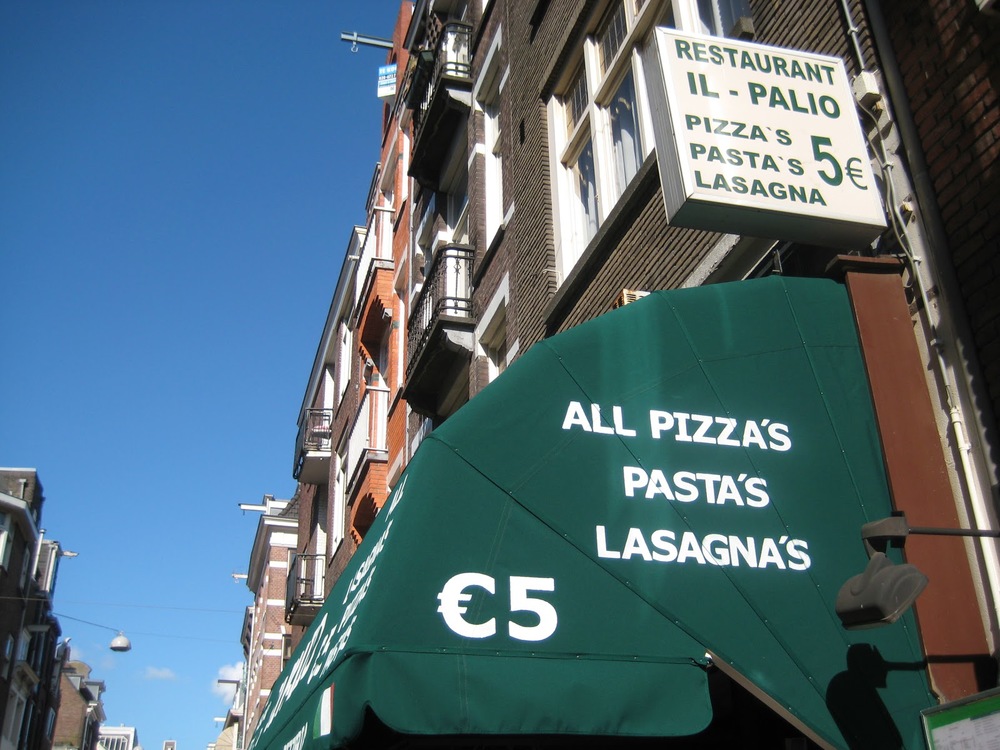
Searching for dinner. Many choice's were available so we weighed our option's. 
Finally: a visit to the BeerTemple! D. was here on a previous Amsterdam visit and enjoyed its extensive variety of beer offerings, especially as she prefers sour Belgian styles over the ales commonly found in the US. On this visit, the Temple featured a multitude of the palest ales. That isn't D.'s cup of tea so she had an UWE cider instead. I had a Mikkeller Peter, Pale and Mary and a Brewdog Clown King. The former is a calm pale ale but the latter is a bare-fisted punch in the nose (in a good way, I think).

Not shown - several empty cases of Weyerbacher Blithering Idiot.
The lady considers the cider.
A bonus church panorama courtesy of Google. Their photo-stitching algorithms do not account for passing streetcars.

Next time: breakfast, boats, and trains.

*I'd like to think there's room for banality in an institution based around placing objects on pedestals, often literally.
**Let's imagine that they did spend the bulk of each night in dramatic poses but found it embarrassing to be painted while doing anything other than standing or banqueting.

Amsterdam - Day two, part one

Amsterdam supposedly contains more specialty museums than any other city on the planet. It's a believable claim, if only because the city has a long history of global trade. It's a natural place for strange collections to accumulate and there's no shortage of room to display it all. Specialty museums in Amsterdam include:

Of these, we only visited the last. I'll get to that one later. 

Amsterdam is certainly more famous for its art museums, including the modern collection of the Stedelijk Museum and the definitively Dutch Rijksmuseum.
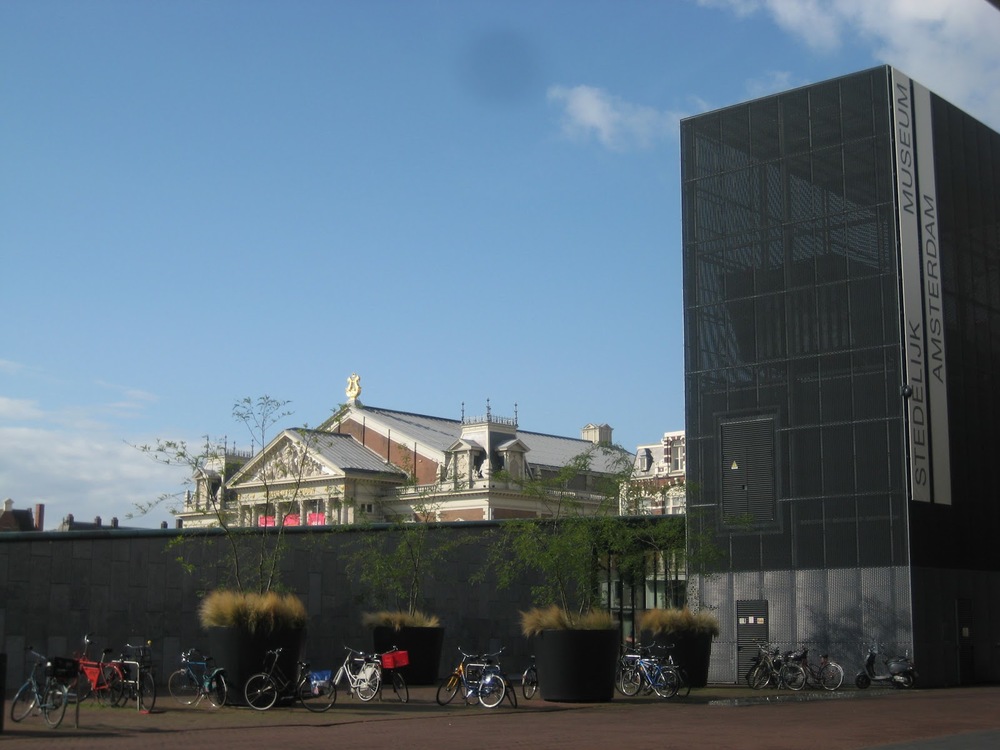
The Stedelijk is smooth and white, like a seafaring Apple store.
The Opera House peeks over a nearby wall. There's a supermarket under all that (the black structure, not the Opera House, at least as far as I can tell).
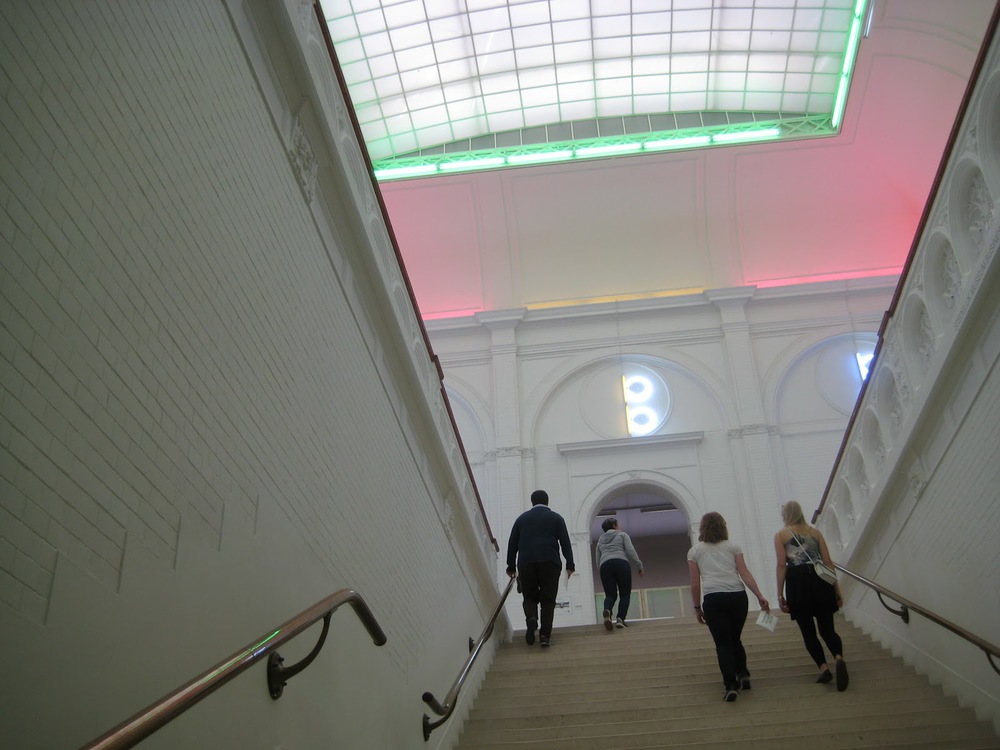
I don't generally take many photographs in museums as it leaves me feeling a bit silly. It's like recording the sound of someone eating soup.* This stairwell at the Stedelijk contains a neon installation by Dan Flavin.

We took a museum break to picnic in the Vondelpark. That's an artificial swan.

Picnic fixin's.
The cheese is from goats. The berry is from straw.
The lady D. enjoying the park.
The Museumplein, the Rijksmuseum, and a kid in a bike lane. Get away from there, kid!

Next time: Dutch Masters. No, really, you'll see them.


Amsterdam - Day one

The wife* and I arrived in Amsterdam on the second Tuesday of this month. Why Amsterdam? It may be the easiest city to visit across all of Western Europe. We didn't know that when we were first making travel plans, but we did know we had friends in nearby areas of Germany and could visit them easily in the same trip.**

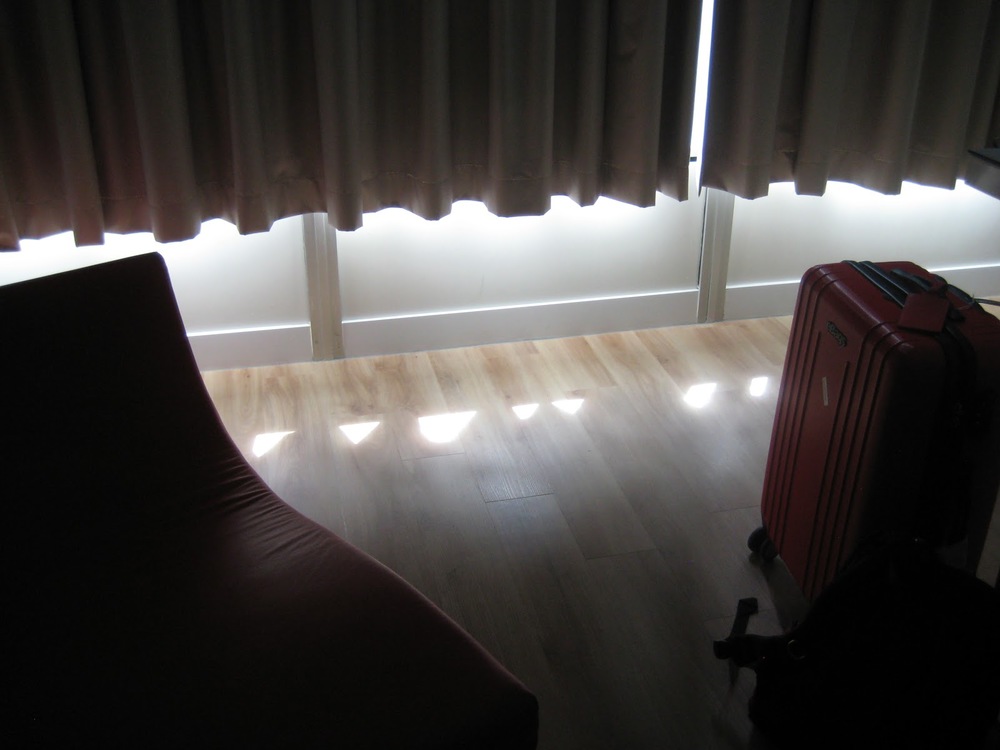
We stayed at the Qbic. It's almost unbelievably convenient, sitting right at the end of an 8 minute ride from the airport. The rooms aren't easy to take photos of.
Perhaps we could have opened the curtains.
It's a bit like staying in a compact RV parked in a new neighborhood brunch place you've been willing to visit for a week or two but you've just been too intimidated by the colored neon and eclectic decor. That's a good thing here - it's a fun place to stay!

Plane delays left us with limited time for museum visits so we explored the local neighborhood. South Amsterdam (Zuid) is bucolic and distant from the noisy attractions of the central city neighborhoods. We found some parks to explore instead.
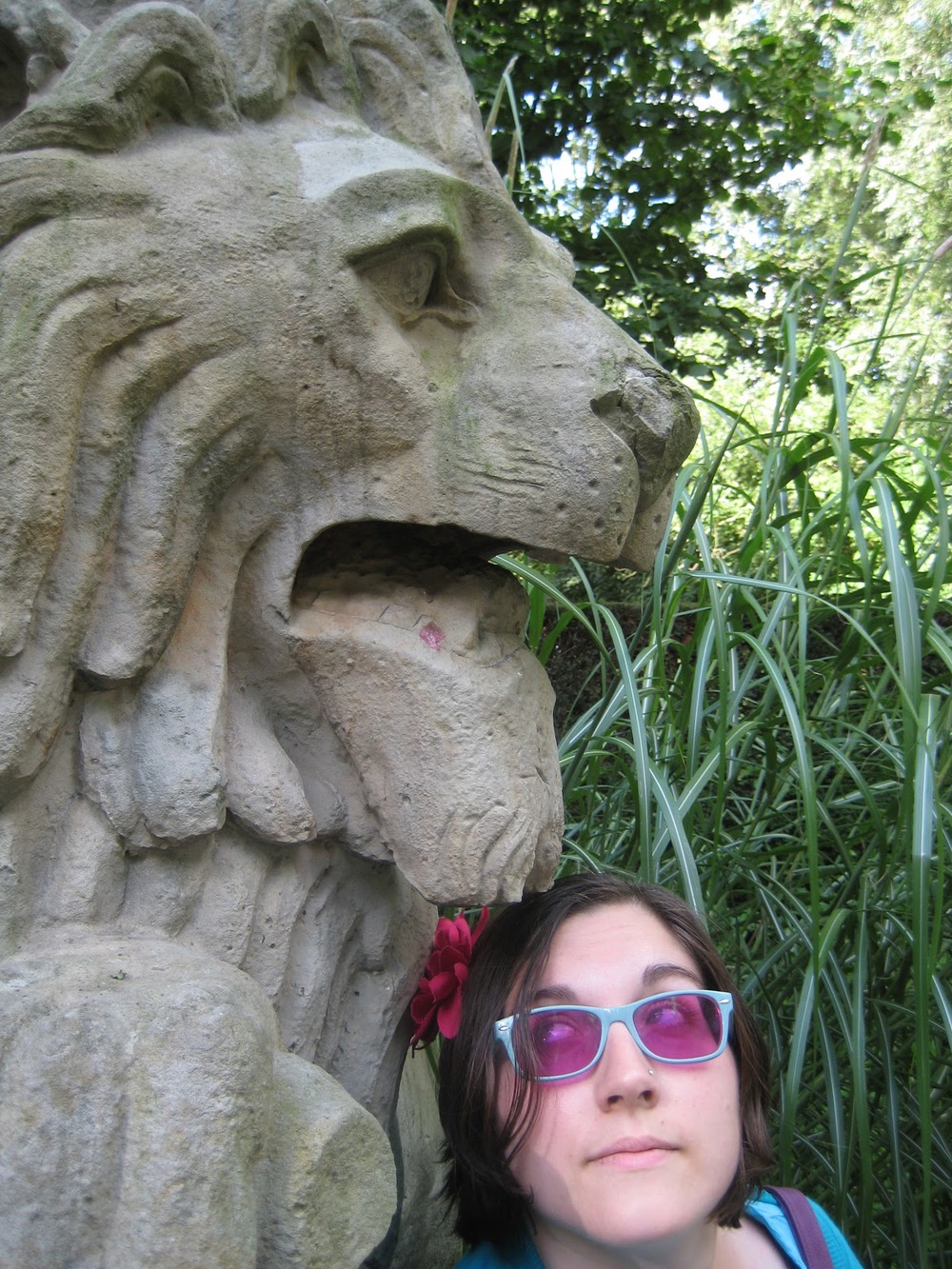
These stone lions guard the Beatrixpark.

The lions aren't very vigilant.

Yarn-bombed canals. They aren't all like that yet.
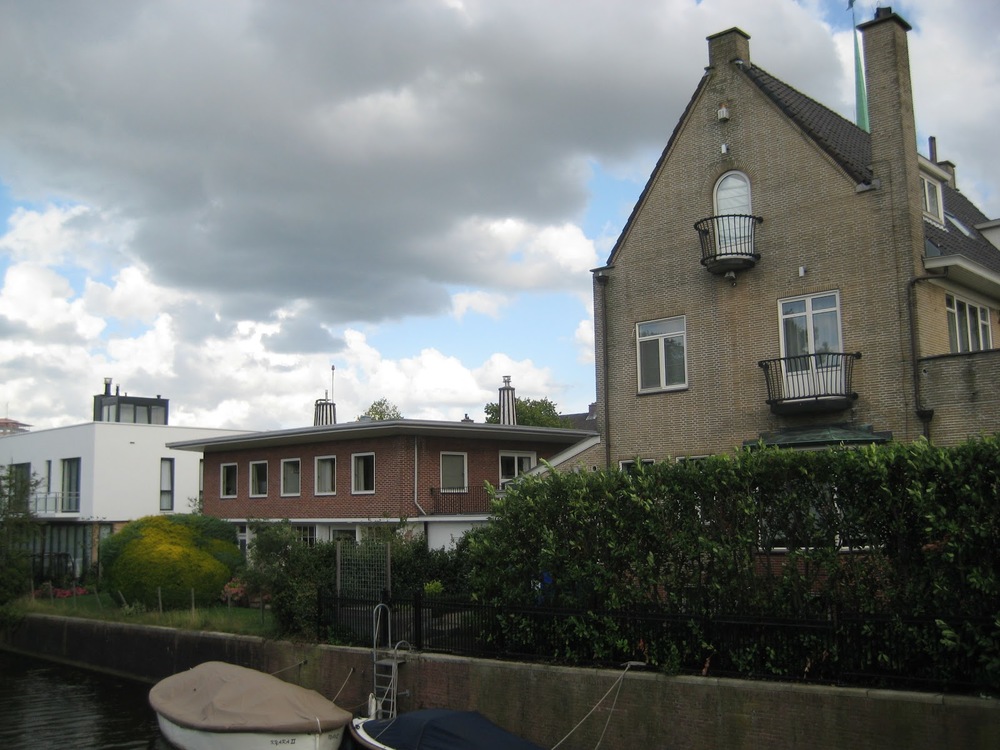
Not far away from the last photo, two stately balconies overlook the canal.

Having successfully explored the South, we found noodles at Wagamama.***

The next day and the next post: Masters of the Dutch Arts!

*She doesn't really like being referred to as "the wife." I just asked her and she expressed a preference for the phrase "my lady." I'll refer to her as D instead.

**Many of the times when I would mention traveling to Amsterdam to colleagues and acquaintances, they'd ask me if I was going there for the marijuana. I wasn't and we didn't. The popular connection between Amsterdam and weed is a unique one, though it will be interesting to see how that changes as more areas legalize consuming the stuff.

***There are US locations of this noodle-centric establishment but they are all in Massachusetts.